
Welcome to Wembley
Cup finals, England nights and a century of legendary gigs. Wembley is where north-west London goes big, with the arch, the arena and a buzzing outlet plaza, plus a lively High Road and Ealing Road just down the hill.
Under the Arch
Say "Wembley" anywhere in the world and people know exactly what you mean. Wembley Stadium is the home of the England national football team, hosts the latter stages of the FA Cup and has the biggest capacity of any stadium in the country. That giant arch on the skyline has been part of London's view since the new stadium opened in 2007.
It replaced the original Empire Stadium, built for the British Empire Exhibition of 1924 and opened for the 1923 FA Cup final. It stood for 77 years before closing in 2000, and it was famously where Queen played Live Aid in 1985. Matchday or gig night, walking up towards the stadium with the crowds is a proper goosebumps moment.
The Arena With a Swimming Pool Past
Right next door, OVO Arena Wembley started life in 1934 as the Empire Pool, built for the British Empire Games. It hosted swimming at the 1948 Olympics and badminton at London 2012, and it's a listed building thanks to its clever pillar-free concrete design. These days it seats around 12,500 for music, comedy, family shows and sport.
The list of who's played here is ridiculous: the Beatles, ABBA, Queen, Led Zeppelin, Pink Floyd, Dire Straits and more. Check what's on before you visit, because there's a good chance something's happening.
Shopping and Eating on the Plaza
Around the stadium, the Wembley Park regeneration has transformed the area, including the pedestrianised plaza of the London Designer Outlet, where you can pick up a bargain and grab something to eat before kick-off. It's handy for a family day even when there's no event on.
Old Wembley: High Road and Ealing Road
About a mile south-west is the older town centre. The small, narrow Wembley High Street is a conservation area, and the long High Road has been the shopping street since the 1920s. Ealing Road is known for its jewellery shops, run by Wembley's large Indian community, and the food in this part of town reflects that, so come hungry.
History buffs can seek out St John the Evangelist, a flint Gothic church designed by George Gilbert Scott and consecrated in 1846, and the Moderne-style 1937 fire station on Harrow Road. Even the name Wembley Park has a story: landscape gardener Humphry Repton designed the grounds here and liked to call his creations "parks".
Easy Hops Into Central London
Wembley is brilliantly connected. Wembley Park station has the Metropolitan and Jubilee lines, Wembley Central has Bakerloo line trains and services into Euston, and Wembley Stadium station has trains to Marylebone. The number 18 bus runs all the way down the Harrow Road to Paddington, too.
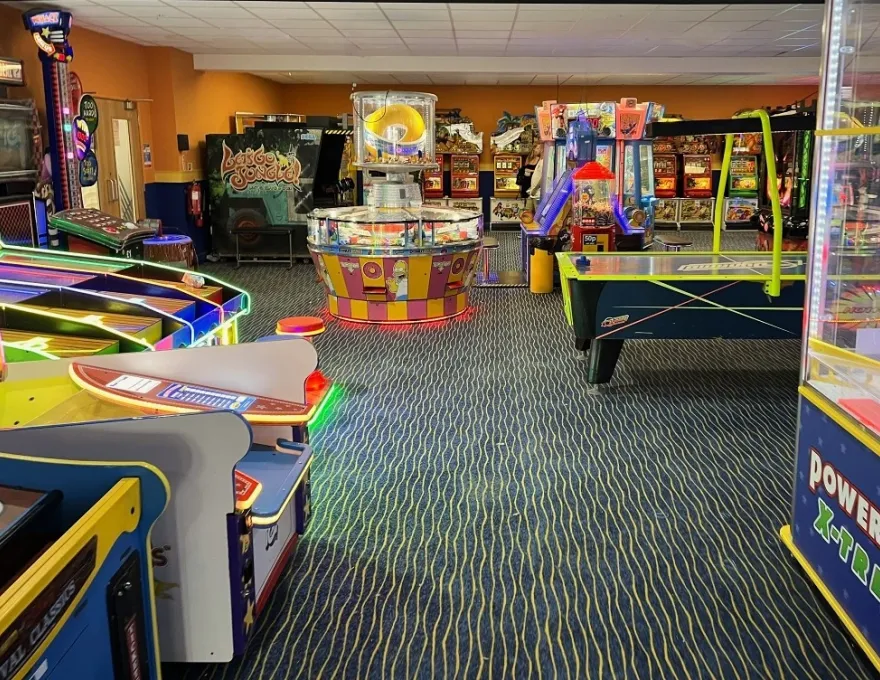
In Wembley you'll also find MERKUR Slots - Wembley, an 18+ adult gaming centre. Scroll down for arcades, food and places to stay around Wembley.

Fuel for the journey
A little planning leaves more in the day-out budget. Compare reported pump prices by town or postcode district.
Fuel price data from FuelCosts.co.uk and UK Government Fuel Finder. Contains public sector information licensed under the Open Government Licence v3.0.
