
MUSEUM
Natural History Museum
⌖
London
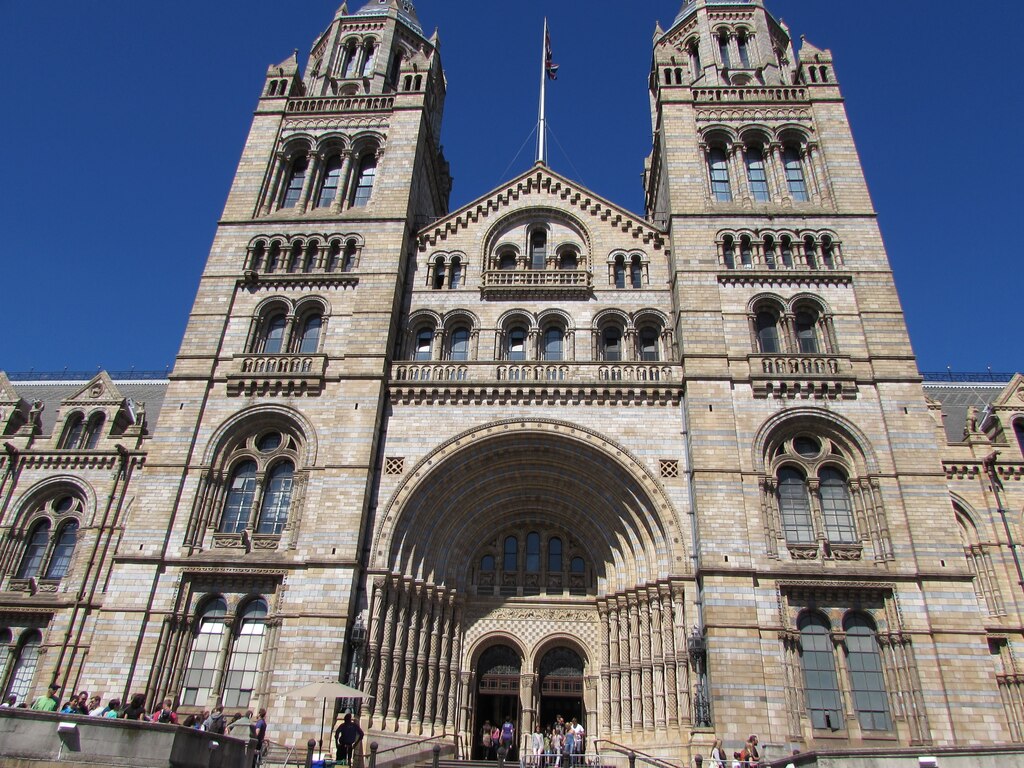
Stepping into the Natural History Museum in South Kensington feels a bit like walking into a church devoted to life on Earth. The building itself, with its terracotta carvings of animals and plants climbing every arch, is worth the trip on its own. Then you look up in the grand central hall and there's a vast blue whale skeleton diving from the ceiling. Not a bad welcome.
No public rating yet
Meet the roaring T. rex, look up at Hope the blue whale and find Fern the Diplodocus in the gardens — a free South Kensington day for curious children and grown-ups.
A cathedral built for nature
Dinosaurs, gemstones and 80 million specimens
The collections run to around 80 million items across botany, insects, minerals, fossils and zoology, though only a fraction is ever on show. That fraction is still enormous. The dinosaur galleries are the big draw for younger visitors, while the earth science side takes you through volcanoes, earthquakes and glittering minerals. Wander far enough and you'll find birds, mammals and specimens collected by Charles Darwin himself.
- Families should head for the dinosaurs early before the crowds build
- Older kids and adults often love the quieter mineral and specimen galleries
- Wet weekends in London don't get much better than this
Handy pointers
General entry is free, which is part of why it gets so busy, especially in school holidays. Arriving early or later in the afternoon makes for a calmer visit, and booking a free timed slot in advance can save hanging about at the door. Temporary exhibitions sometimes carry their own charge. The main frontage is on Cromwell Road, a short walk from South Kensington Tube.
Pick three favourites and make a day of it
Start beneath Hope the blue whale in Hintze Hall, find the roaring T. rex in the Dinosaurs Gallery, then head outside to Fern the Diplodocus in the Evolution Garden. That gives dinosaur-mad children three very different things to look forward to, with time for a snack between them. The museum map helps you choose what comes next instead of trying to squeeze every gallery into one afternoon.
Free galleries, with a bit of planning before the fun
The main galleries are free. Booking a free entry ticket is the museum’s way to guarantee entry; paid exhibitions have their own tickets. Normal London opening is 10am–5.50pm, with last entry at 5.30pm, and the museum closes on 24–26 December. Use the official London visitor page for your date and ticket choice. This guide is for South Kensington, not the separate museum at Tring.
Choose the entrance that suits your group
Queen’s Gate has step-free entry via a ramp. The central Cromwell Road entrance is also step free, but its ramp is steep; the Exhibition Road entrance is not step free, although there is a lift from its lobby to the galleries. The access guide also identifies quieter spaces and free, pre-booked Dawnosaurs mornings for disabled and neurodiverse children and their families. The Creepy Crawlies Gallery is currently closed for redevelopment, and gallery/lift notices can affect your route, so check the map before choosing those stops.
Visitor choices, entry and access checked on 1 November 2026 against the museum’s linked information. This is a researched guide, not a new personal visit or Raider Score.
A whole museum mile on your doorstep
The Science Museum and the V&A are practically next door on Exhibition Road, and Hyde Park is just up the road for a run-around afterwards. Pop over to our London page for heaps more ideas across the capital.
