
HISTORIC CASTLE
St Andrews Castle
⌖
St Andrews
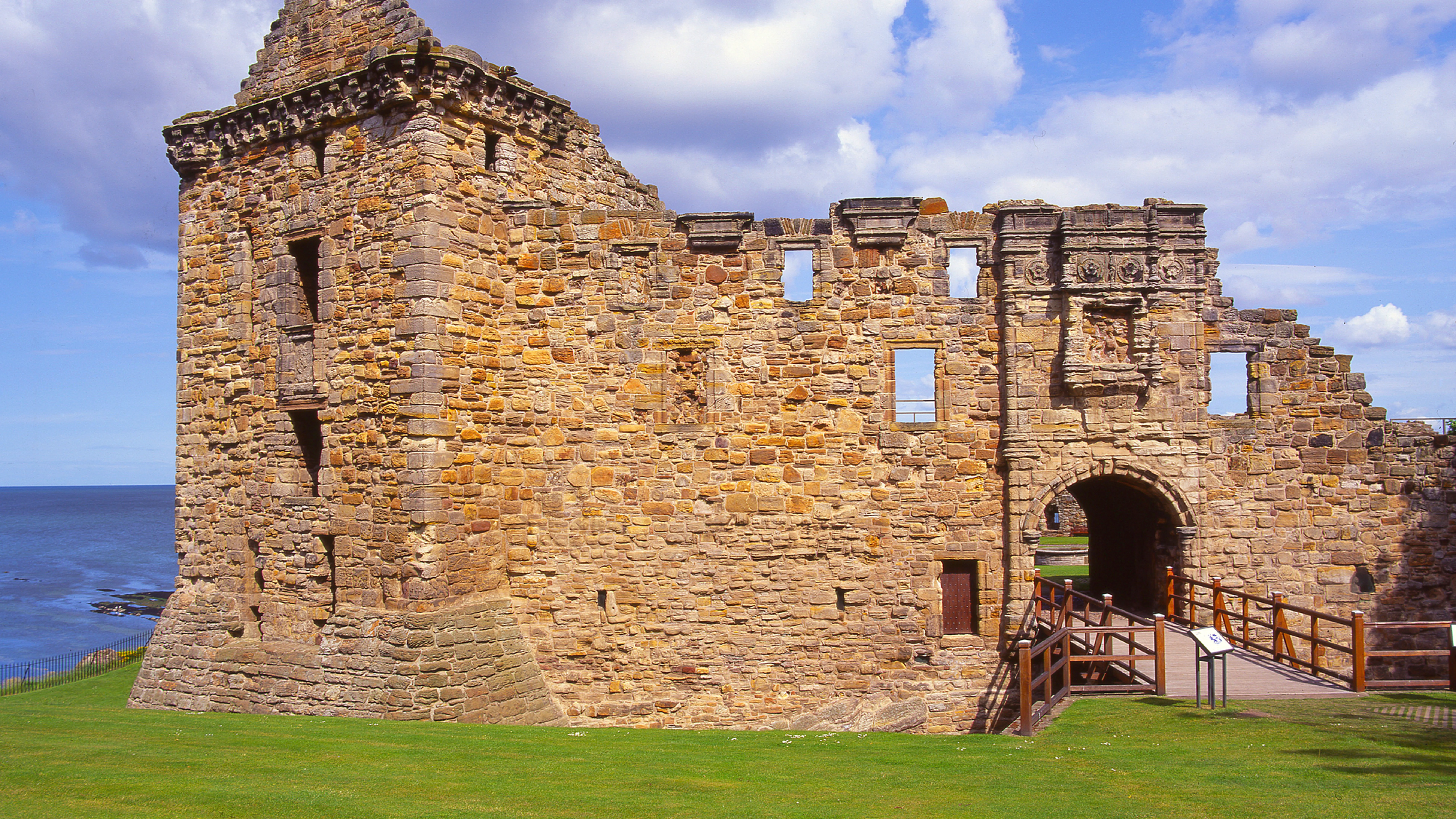
St Andrews has plenty of postcard-pretty bits, but the castle is where the story gets a lot darker. Sitting above the coast on The Scores, it spent centuries as a bishop’s palace, fortress and prison. If you like your historic sites with an actual story behind the stones, there is much more going on here than a quick photograph of another ruined castle.
★ 4.2
1,199 TRIPADVISOR REVIEWS
St Andrews Castle is a dramatic coastal ruin with a 450-year history as a bishop's palace, fortress and prison, including the bottle dungeon and siege mine workings.
St Andrews Castle – bishops, sieges and one very unpleasant dungeon
The castle’s history stretches across roughly 450 years. It was tied closely to the medieval Scottish church and later became one of the key settings in the violence surrounding the Protestant Reformation.
The bits everybody remembers
The bottle dungeon is probably the feature that sticks in most people’s minds. It is a deep, cramped prison cut into the rock, associated with some particularly grim moments in the castle’s history. Protestant preacher George Wishart may have been imprisoned there, and after Cardinal David Beaton was assassinated in 1546 his body was placed in the dungeon.
The murder led to the siege of 1546–47. Attackers and defenders then dug a mine and countermine through the rock around the castle. Those tunnels are one of the site’s most unusual features and help turn what might otherwise be another set of ruins into something you can properly picture people fighting over.
Important current restriction
Do not travel specifically for the tunnels without checking first. Historic Environment Scotland currently says the mine and countermine, along with the Bishop’s Apartments, are closed. Large parts of the rest of the castle remain open, including courtyards, towers and other interior areas, so there is still plenty to see, but this is exactly why we keep telling people to check the official page before making a long journey for one particular feature.
The castle also has an exhibition and audio-guide options to help put the ruins into context. That is useful here because knowing who was fighting whom and why makes the surviving stonework much more interesting.
Opening times
Current seasonal hours are 9.30am to 5.30pm daily from 1 April to 30 September, and 10am to 4pm daily from 1 October to 31 March. Tickets are sold for a specific date and time, with separate arrangements for Historic Scotland members, Explorer Pass holders and eligible partner memberships.
Because hours and access restrictions can change around conservation work, check the live Historic Environment Scotland information before travelling, especially in winter or if one feature is the reason for your visit.
Access and what the ground is like
The visitor centre itself is level and includes a multi-sensory exhibition with audio-visual material. From there it is roughly 50 metres to the castle over reinforced grass, with access into the courtyard by a wooden bridge. The courtyard is grass covered.
Some of the upper areas involve stone spiral staircases with handrails, so not every part of the monument suits every visitor. Historic Environment Scotland publishes detailed access information and has an adapted toilet on site. Assistance dogs are permitted, but ordinary dogs are not allowed.
Fit it into a St Andrews day
The location makes this easy to combine with the rest of St Andrews. You are not driving miles out of town to an isolated site, so the castle works well as one part of a day that also includes the centre, coast and other historic attractions.
We would give it enough time to read the story rather than racing through. If you simply look at the walls, you will miss most of what makes St Andrews Castle interesting. The assassinations, siege, religious conflict and underground engineering are the reason the place sticks in your head.
Why it is on Spin Raiders
Our days-out guides are meant to help you choose places that genuinely add something different to the trip. St Andrews Castle does that. It gives you a strong piece of Scottish history right in the town, but it is also a place where current access matters. We have kept the guide clear about the tunnel closures rather than selling you something you cannot currently do.
Historic Environment Scotland declined our request for a backlink because of its external-linking policy, which is completely fair enough. That does not change whether the attraction is useful to visitors, so the page stays in the guide on its own merits.
